

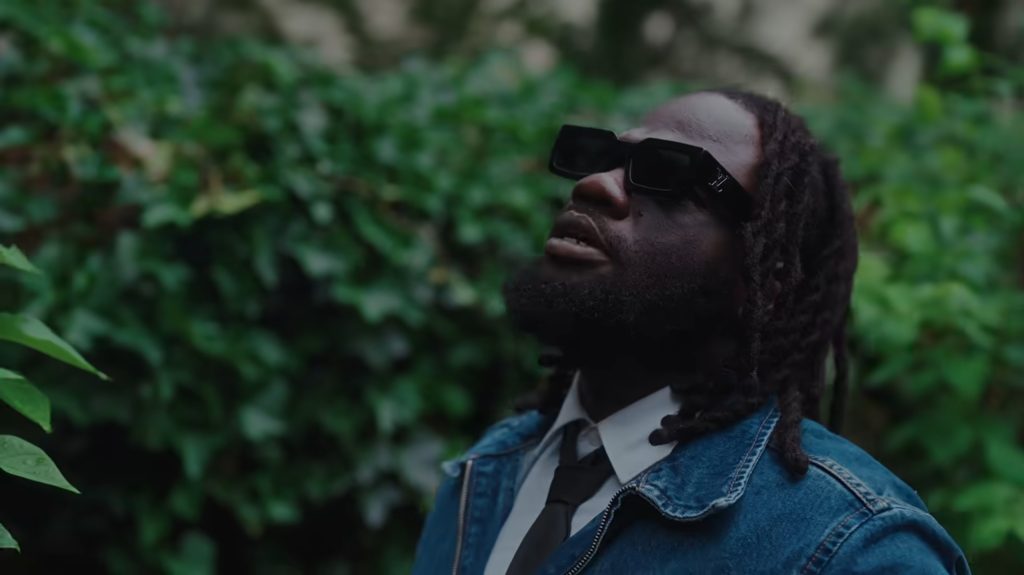
Dancehall artiste Chronic Law has publicly challenged a report by Nationwide 90FM about his latest bid for bail in the United States, accusing an investigator referenced in court testimony of giving an account that does not match the timeline of their interactions.
The artiste, whose real name is Ackeme Jermane Campbell, responded after Nationwide published a September 17 report titled “Guns, gangs and Malie Donn: inside Chronic Law’s new push for bail.”
The report, written by William H. Mitchell, examined newly released court records and transcripts concerning the reasons Campbell was denied bail in July. Nationwide reported that the documents included testimony about Campbell’s alleged connections to Jamaican and Caribbean gangs and his musical feud with fellow dancehall artiste Malie Donn.
Chronic Law subsequently shared a screenshot of the Nationwide report on Instagram and posted a lengthy statement challenging the account while also sharing screenshots from the court proceedings.
Chronic Law Questions The Alleged February Interview
One of Chronic Law’s main objections concerns an alleged post-Miranda interview referenced in the court testimony.
In his Instagram caption, the artiste said he only saw the investigator in question twice.
According to Chronic Law, their first encounter was on January 12, when he was arrested and taken into Immigration and Customs Enforcement (ICE) custody.
He alleged that during that encounter, the investigator told him that if he provided information, he would not have to remain in lockup.
Chronic Law said he nevertheless spent months dealing with his detention and legal situation.
He then said the next time he saw the investigator was on July 5.
That date is significant because the U.S. Department of Justice confirms that Campbell was arrested in Miami, Florida, on July 5 in connection with the federal firearm case. He was detained without bond following his initial federal appearance in Florida.
Chronic Law therefore questioned how he could have participated in a post-Miranda interview with the investigator in February if, according to his account, he was in ICE custody at that time.
“So how mi fi supposedly do a post Miranda interview wid you in February when mi did deh inna ICE custody?” he wrote.
He further stated that he did not see the investigator again between January and July.
What The Court Testimony Says About Information
The court excerpts shared by Chronic Law contain questioning of an agent identified in the transcript as Agent Nelson.
During the questioning, the agent was asked about information allegedly obtained from Campbell and whether material concerning his alleged affiliations came from his music videos or from statements he made after being advised of his Miranda rights.
The agent testified that, during a post-Miranda interaction, Campbell discussed his affiliation and connections.
He also testified that Campbell had shared information with him in the past.
The defense then asked the agent whether he had attempted to certify Campbell as a confidential source.
“I didn’t,” the agent responded.
The agent explained that he took whatever conversation he had with Campbell and used it to continue his investigation.
That exchange is central to the controversy because it establishes that an investigator testified about Campbell allegedly sharing information, while also confirming that he had not formally certified Campbell as a confidential source.
What The Testimony Does And Does Not Establish
The excerpts posted by Chronic Law do not, by themselves, establish that he became a confidential informant.
They also do not establish that he provided information to authorities in exchange for bail.
What the testimony does show is that an investigator told the court that Campbell had allegedly shared information with him in the past and that the investigator used those conversations as part of his investigation.
Whether those conversations amounted to cooperation in the sense being discussed online is a matter that should not be assumed from the excerpts alone.
Chronic Law is disputing the account and, most importantly, is questioning the timing of the alleged post-Miranda interaction.
Why Nationwide’s Report Mentions Malie Donn
Nationwide’s report focuses heavily on the alleged connection between Campbell’s bail proceedings, gang-related allegations and his musical feud with Malie Donn.
The court material shared by Chronic Law also contains testimony about the rivalry between Campbell and another Jamaican dancehall artist identified in the transcript as Kamali Hilton, also known as Malie Donn.
One excerpt describes Hilton as a rival Jamaican rap artist who had released diss tracks aimed at Campbell, with Campbell responding with diss tracks of his own.
The excerpt further describes the songs and music videos as containing references to loyalty to respective groups and threats of violence.
It also refers to an album cover associated with a diss track and describes an alleged incident involving one of Campbell’s associates.
Those details form part of the material that prosecutors and investigators appear to have presented in connection with the government’s arguments surrounding Campbell’s detention.
However, the fact that these allegations appear in court documents does not mean they have been proven at trial.
Agent Questioned About Chronic Law’s Music
Another portion of the testimony concerns the extent to which Campbell’s music was being used as evidence in the investigation.
The defense questioned the agent about whether references to gang activity and violence came from Campbell’s music videos rather than direct statements by the artiste.
The agent discussed songs in which Campbell allegedly referenced Jamaican gang violence in the United States, including references to individuals who had been killed and to another Jamaican gang leader who had been arrested by the agent.
The questioning also addressed whether there were injuries connected to the gang violence being discussed.
In another portion of the testimony concerning firearms, the agent was asked whether he had been involved in the arrest during which guns were recovered.
He said he had not.
Chronic Law Says The Case Keeps Changing
Chronic Law’s response went beyond the alleged cooperation claim.
He questioned why, in his view, the arguments surrounding his case have expanded into discussions about his music, music videos, other people’s cases and accusations involving other individuals.
“Every time mi go court, the argument keep changing,” he wrote.
He said he was arrested over what allegedly happened in Georgia but believes the proceedings have increasingly focused on matters outside the specific allegations that led to his arrest.
Chronic Law also claimed that he believes the ultimate objective is to have him deported from the United States.
That is his interpretation of the situation and has not been established as the government’s motive.
Chronic Law Also Challenges The Investigator’s Jurisdiction
In his statement, Chronic Law questioned why the investigator had been involved in the matter in the first place.
He pointed out that the investigator was not the officer who arrested him and argued that the investigator was following up on an issue that, from his perspective, was outside the officer’s jurisdiction.
He suggested that either the investigator had something personal against him or that there was another explanation for the circumstances.
“From my perspective either you have something personal against me. Or there something else behind it because none of this adding up,” Chronic Law wrote.
Those statements are allegations made by Campbell and are not findings by the court.
The Federal Gun Case Behind The Bail Fight
The controversy is unfolding against the backdrop of Campbell’s federal firearm case in Georgia.
According to the U.S. Department of Justice, Campbell is charged with possession of a firearm by a prohibited person.
Prosecutors allege that the case stems from a November 15, 2025 incident in Turner County, Georgia, when deputies attempted to stop Campbell’s vehicle after it was allegedly travelling at more than 120 miles per hour.
The Justice Department says officers later recovered four firearms and 92 rounds of ammunition. The government alleges that one of the guns had been reported stolen in Miami.
The federal complaint also alleges that Campbell admitted to agents that the firearms belonged to him and that he had not obtained the necessary waivers allowing a person on his type of visa to possess firearms.
These are allegations contained in the government’s criminal complaint. The Justice Department explicitly notes that a criminal complaint is not proof of criminal conduct and that Campbell is presumed innocent unless and until proven guilty in court.
Why Bail Became A Major Issue
Campbell’s detention has become a significant part of the case because prosecutors have argued that he should remain in custody while the federal proceedings continue.
The Justice Department said the government’s concerns included the seriousness of the firearm allegations, the number of firearms and ammunition allegedly involved, Campbell’s alleged gang affiliation and what prosecutors characterized as a risk of flight.
Nationwide’s September 17 report examines newly released records that provide additional detail about the government’s arguments during the earlier bail proceedings.
It is those records, and Nationwide’s interpretation of them, that Chronic Law has now publicly challenged.
Chronic Law’s Main Point
At the heart of Chronic Law’s response is a question about the timeline.
He is not simply saying that the court documents do not exist. Instead, he is pointing directly to the testimony and arguing that the account described in the proceedings does not make sense when compared with his recollection of when he encountered the investigator and where he was being held.
He says the investigator approached him in January, offered what Chronic Law interpreted as an opportunity to provide information, and then did not see him again until July.
That is why he is questioning the reference to a February post-Miranda interview.
At the same time, the testimony shared by Chronic Law contains an investigator’s account that Campbell had discussed affiliations and had shared information with him previously.
The available excerpts therefore present two competing accounts that should not be collapsed into one conclusion.
Chronic Law’s Message To Nationwide
By sharing the Nationwide article alongside excerpts from the court proceedings, Chronic Law made it clear that he wanted to challenge not only the allegations being discussed but also how the information was being presented publicly.
He accused those involved of believing they could mislead the public, writing: “unu cyan fool everybody. Pick sense outta nonsense.”
He also directly questioned Nationwide’s presentation of the court material, making the media report itself part of his public response.
What Happens Next
Campbell’s federal case remains unresolved, and the allegations against him have not been tested at trial.
The documents now being discussed provide additional information about the government’s arguments for keeping him detained, including allegations concerning firearms, gang associations, his music and his alleged interactions with investigators.
Chronic Law, however, is disputing the interpretation of those materials and has specifically raised questions about the alleged February interview and his interactions with the investigator.
For now, the court excerpts establish that an investigator testified about Campbell allegedly sharing information in the past. They do not, by themselves, establish that Campbell was a formally designated confidential informant or that he provided information in exchange for bail.
The dispute over how that testimony should be understood is now playing out publicly, with Chronic Law making his position clear through the same court material that has become part of the discussion surrounding his latest bail effort.