

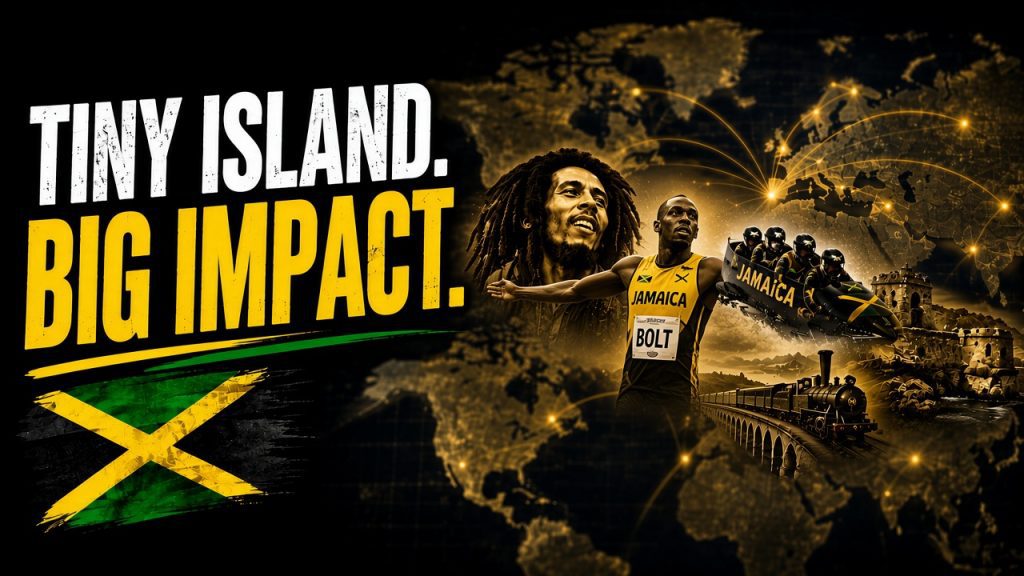
Jamaica is a pretty small island. You can drive across large parts of it in a few hours, and depending on where you live, you might be just minutes away from a beach, a roadside shop or somebody who knows your entire family.
But don’t let the size fool you.
This little island has managed to do some things that would make you stop and ask, “Wait, Jamaica did WHAT?”
From manufacturing and exporting its own vehicles to having electricity in the 19th century, Jamaica’s history is filled with achievements that many people, including Jamaicans themselves, probably don’t know enough about.
We’ve given the world some of its greatest athletes, created music that travels across every continent and even sent a team from the Caribbean to compete in a sport played on ice.
And that’s just the beginning.
Here are 10 times Jamaica shocked the world.
1. Jamaica Sent a Bobsled Team to the Winter Olympics
Imagine growing up in a country where snow is practically something you see on television, then deciding that you’re going to compete in a sport that involves racing down an icy track at incredible speeds.
Sounds like something somebody would suggest as a joke, right?
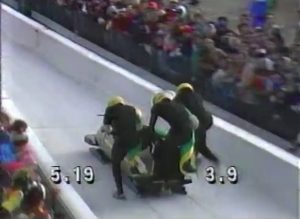
Well, in 1988, Jamaica actually did it.
The Jamaican bobsled team made its debut at the Winter Olympic Games in Calgary, Canada. The idea was so unusual that people around the world couldn’t help paying attention.
The team had to learn a sport that was completely unfamiliar to most Jamaicans. They faced limited resources, unfamiliar equipment and plenty of scepticism from people who couldn’t understand why a tropical island would want to compete in a winter sport.
But they made it to the Olympics.
Their journey became even more dramatic when the four-man team crashed during competition. The incident was watched around the world, and although they didn’t finish the race, their story was far from over.
In fact, the team became so famous that it inspired Disney’s 1993 movie Cool Runnings.
The film took plenty of creative liberties, but the real achievement was already remarkable.
Jamaica had entered a sport that seemed completely unrelated to its climate, challenged expectations and created one of the most recognisable stories in Winter Olympic history.
Not bad for an island where finding snow outside a freezer would be a serious challenge.
2. Jamaica Actually Manufactured and Exported Its Own Cars
Here’s something that might surprise even some of the biggest Jamaican car enthusiasts.
There was a time when Jamaica wasn’t just importing vehicles from Japan, Germany and the United States. We were actually building our own vehicles and exporting them to other countries.
And the man behind this ambitious project was Patrick Marzouca.
Through a Westmoreland-based company called Excel Motors Limited, Marzouca set out to prove that Jamaica could do more than simply buy cars from overseas.
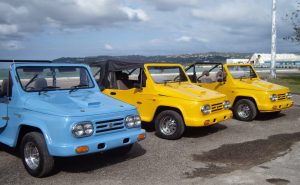
The company developed a vehicle known as the Island Cruiser.
It wasn’t some unfinished prototype sitting in a garage. These were actual vehicles being produced for the market.
The Island Cruiser featured a locally constructed fibreglass body using Jamaican materials, while its engine and other mechanical components included imported Japanese parts.
The project attracted government attention, with JAMPRO providing technical assistance and support.
In December 2002, Excel Motors unveiled its 2003 line of Island Cruisers in Savanna-la-Mar. The company was already receiving orders, including interest from overseas markets.
Then came an even bigger moment.
In August 2003, Jamaica exported an Island Cruiser to The Bahamas. This was a major milestone for the country’s manufacturing industry.
Think about that for a moment.
A Jamaican company had developed a vehicle, manufactured it locally, and successfully sold one to a customer in another country.
The story didn’t end there either. In 2010, Excel Motors was preparing to export three more Island Cruisers to the Turks and Caicos Islands.
Marzouca’s achievement showed that Jamaican manufacturing could reach beyond traditional industries.
We often talk about importing cars, but how many people know that Jamaica once had its own vehicle manufacturer producing cars for local and Caribbean markets?
The Island Cruiser deserves a place in our industrial history.
3. Jamaica Has an Extraordinary Number of Churches
If you’ve ever travelled through Jamaica, you’ll probably understand this one.
You could be driving through a small rural community, passing houses, shops and little roadside businesses, and suddenly you’ll see another church.
Then another one.
Sometimes, they seem to be right next to each other.
Jamaica has more than 1,600 churches representing a wide range of Christian denominations, and the island is frequently credited with having the most churches per square mile in the world.
The claim is repeated by Jamaica’s tourism authorities and other local institutions, although the precise Guinness World Records recognition is difficult to independently verify.
Still, the country’s religious landscape is remarkable.
From massive churches in Kingston to small wooden buildings tucked away in rural communities, places of worship are part of everyday Jamaican life.
And it’s not just Christianity. Jamaica also has communities practising Rastafarianism, Judaism, Islam, Hinduism and other faiths.
For a country of its size, the variety and visibility of religious institutions are quite something.
You might not have to travel very far to find a church in Jamaica. In some communities, finding one might actually be easier than finding a gas station!
4. Jamaica Had a Railway in 1845
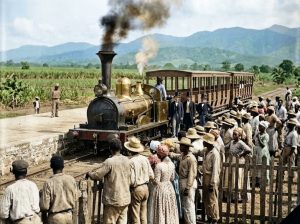
Here’s another piece of Jamaican history that deserves much more attention.
Jamaica had a railway long before many people would imagine.
The country’s first railway opened on November 21, 1845, connecting Kingston to Spanish Town.
Let that sink in for a moment.
This was happening in the 1840s, when rail travel was still relatively new across much of the world.
Jamaica’s railway was the first to open outside Europe and North America, making the island an early pioneer in railway transportation.
The original project was developed by two English brothers, William and David Smith, who proposed building the railway to the Jamaican government.
Construction began in 1844, and the first section was completed the following year.
Over time, the network expanded to connect more communities and important agricultural and commercial areas.
Trains eventually travelled through several parishes, connecting places that would otherwise have been difficult to reach.
The railway transported passengers and goods, helping industries such as agriculture and mining move products across the island.
And here’s something that makes the story even more interesting.
Jamaica’s railway system eventually stretched far beyond that original Kingston-to-Spanish Town route, reaching places including Montego Bay and Port Antonio.
Sadly, the passenger railway service eventually came to an end in 1992.
But when you consider that Jamaica had railway transportation as far back as 1845, it’s hard not to wonder what the country’s transportation system might look like today if that network had continued developing.
5. Jamaica Had Electricity in 1892
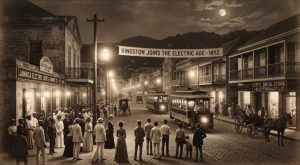
Now here’s one that might genuinely surprise you.
Jamaica was generating electricity as far back as 1892.
Yes, while the island was still living in the 19th century, electricity was already being supplied in Kingston.
The Jamaica Electric Light Company began providing electricity from a small coal-burning steam generating plant on Gold Street.
This was just 13 years after Thomas Edison’s development of a successful practical electric lamp.
At the time, electricity was still a relatively new technology, and many major cities around the world were yet to establish widespread electric services.
But Kingston was already making its move.
The story didn’t stop there.
In 1897, another company established a hydroelectric plant on the Rio Cobre at Bog Walk.
That meant Jamaica was exploring more than one way to generate electricity at a time when the technology was still developing.
Eventually, electricity supply expanded across the island, with the Jamaica Public Service Company being established in 1923.
It’s easy to take electricity for granted today. We plug in our phones, switch on the television and complain when the light goes out.
But imagine living in Jamaica in 1892 and knowing that your city was already receiving this relatively new technology.
That’s quite an achievement for a small Caribbean island.
6. Port Royal Was Once Known as the Wickedest City on Earth
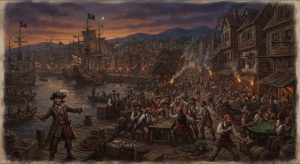
If you think Jamaica’s reputation for excitement started with dancehall parties and nightlife, you might want to take a trip back to the 1600s.
At the entrance to Kingston Harbour sits Port Royal, a historic town that once had a reputation unlike almost anywhere else in the Caribbean.
During the 17th century, Port Royal became an important English port and a major centre for trade, piracy and privateering.
It attracted sailors, merchants, pirates and adventurers from different parts of the world.
Money flowed through the town, businesses flourished, and its reputation for gambling, drinking and lawlessness became legendary.
It was so notorious that it became known as the “wickedest city on Earth.”
Of course, that nickname should be understood in the context of its history and the way writers described the town. Port Royal was also an important commercial centre built on colonial trade and the exploitation of enslaved Africans.
But in 1692, everything changed.
On June 7, a powerful earthquake struck Jamaica, devastating Port Royal. Large sections of the town sank beneath the sea, and a tsunami added to the destruction.
Thousands of people lost their lives.
Today, part of old Port Royal remains underwater, preserving an extraordinary archaeological record of life in the 17th century.
It’s almost difficult to imagine that a place with such a colourful and notorious history is sitting right here in Jamaica.
7. Jamaica Produced the Fastest Man in Recorded History
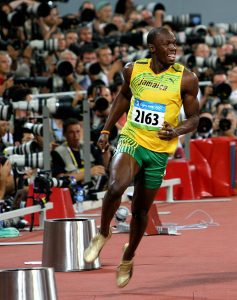
When it comes to sprinting, Jamaica has given the world plenty of reasons to pay attention.
But one man took that reputation to another level.
Usain Bolt.
At the 2008 Beijing Olympics, Bolt announced himself to the world with performances that left spectators struggling to believe what they were watching.
He won the 100-metre and 200-metre races, setting world records in both events.
Then came the 2009 World Championships in Berlin.
Bolt ran the 100 metres in an unbelievable 9.58 seconds and the 200 metres in 19.19 seconds.
Those performances remain the world records.
Think about that.
The fastest 100-metre time ever recorded by a human being is held by a man from Jamaica.
And it wasn’t just about his speed.
Bolt had a personality that made him a global superstar. His celebrations, confidence and famous lightning-bolt pose became recognisable everywhere.
People who had never watched athletics before suddenly knew who Usain Bolt was.
He became one of the most recognisable athletes in sporting history, and his achievements helped cement Jamaica’s reputation as a sprinting powerhouse.
For a country with a population of only a few million people, that’s quite extraordinary.
8. Jamaica Set a 4×100-Metre World Record That Still Stands

If you thought producing Usain Bolt was impressive enough, Jamaica wasn’t finished.
At the 2012 London Olympics, the Jamaican men’s 4×100-metre relay team delivered one of the most memorable performances in athletics history.
The team consisted of Nesta Carter, Michael Frater, Yohan Blake and Usain Bolt.
They weren’t just racing for a gold medal.
They were chasing history.
When Bolt received the baton for the final leg, Jamaica was already in a strong position. He powered down the track and crossed the finish line as the crowd erupted.
The clock stopped at 36.84 seconds.
A new world record.
Jamaica had become the first team to break the 37-second barrier in the men’s 4×100-metre relay.
And here’s the really interesting part.
That 36.84-second performance remains the world record.
It was another reminder that Jamaica’s dominance in sprinting wasn’t limited to one extraordinary athlete.
The country had developed an entire generation of world-class sprinters capable of producing performances that the rest of the world struggled to match.
9. Jamaica Qualified for the 1998 FIFA World Cup

Jamaica might be better known internationally for athletics, but football has also given the country some unforgettable moments.
And none was bigger than November 16, 1997.
The Reggae Boyz were chasing something that had never been achieved by an English-speaking Caribbean country.
A place at the FIFA World Cup.
After a difficult qualifying campaign, Jamaica faced Mexico at the National Stadium in Kingston.
The pressure was enormous.
The team needed a result, and the entire country was watching.
When the final whistle blew, the score was 0-0.
That was enough.
Jamaica had qualified for the 1998 FIFA World Cup in France.
The celebrations that followed were massive. The achievement was so important that the government declared the following day a public holiday.
For a country that had never appeared at football’s biggest tournament, this was an extraordinary moment.
Then came France 1998.
Jamaica faced Croatia, Argentina and Japan in the group stage.
Although the team didn’t advance, it managed to secure a memorable 2-1 victory over Japan.
Robbie Earle also scored Jamaica’s first-ever World Cup goal against Croatia.
The Reggae Boyz had finally reached the world stage, and millions of people who might never have paid attention to Jamaican football suddenly knew the team.
10. Jamaica Created a Musical Movement That Conquered the World
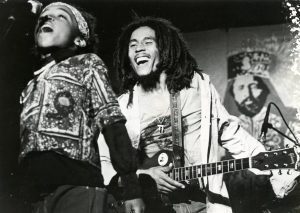
There are very few countries that can claim to have influenced global music in the way Jamaica has.
And it all started with sounds that developed right here on the island.
Jamaican music evolved through several stages, including mento, ska and rocksteady, before reggae emerged and began spreading internationally.
What started as music rooted in local communities eventually became a global cultural force.
Reggae carried Jamaican expressions, rhythms, social commentary and cultural identity far beyond the island.
Its influence reached Africa, Europe, Asia, North America and the Caribbean.
And it didn’t stop there.
Jamaican music also helped shape other genres, including dancehall and hip-hop, while Jamaican sound-system culture influenced how music was played and experienced around the world.
In 2018, UNESCO officially recognised reggae music of Jamaica on its Representative List of the Intangible Cultural Heritage of Humanity.
That’s international recognition of something Jamaicans have known for generations.
Our music is special.
You can travel to places where people have never visited Jamaica, and there’s still a good chance they’ll recognise the rhythm of reggae or know some Jamaican expressions through music.
Not many small countries have managed to put their culture on the global stage quite like Jamaica.
And we’re still doing it.
Honourable Mentions
Some Jamaican stories deserve recognition even when they don’t make our main ten.
These two definitely belong on that list.
Bob Marley Became a Global Cultural Icon
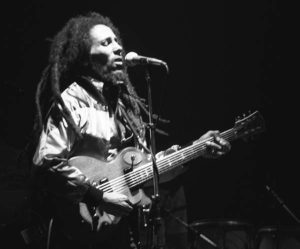
You can’t tell the story of Jamaica’s influence on the world without mentioning Bob Marley.
Born in Nine Mile, St. Ann, Marley became one of the most influential musicians of the 20th century.
His music carried messages of love, unity, resistance, freedom and social justice.
Songs such as One Love, Three Little Birds and Redemption Song continue to reach new generations decades after his death.
He helped bring reggae to international audiences and became a symbol of Jamaican culture around the world.
His influence went far beyond music, making him one of the most recognisable Jamaicans in history.
The Kendal Train Disaster
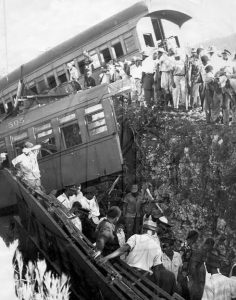
Not every shocking moment in Jamaica’s history is something to celebrate.
On September 1, 1957, Jamaica experienced one of its worst railway disasters when a passenger train travelling from Kingston to Montego Bay derailed at Kendal in Manchester.
The train was carrying hundreds of passengers, many of whom were returning from a religious outing.
The disaster claimed more than 200 lives and left many others injured.
It remains one of the darkest moments in Jamaica’s transportation history.
The tragedy is a reminder that some events leave a mark on a country that lasts for generations.
Jamaica Is Small, But Its Story Is Anything But Small
Looking at these stories together, one thing becomes clear.
Jamaica has never been a country that needed a massive land area or population to make its presence felt.
From early electricity and railway transportation to manufacturing vehicles, producing world-record-breaking athletes and creating music that the entire world enjoys, this island has repeatedly found ways to make history.
And the interesting thing is that these are only some of the stories.
There are plenty more Jamaican achievements, inventions, cultural moments and historical events that deserve to be told.
So the next time somebody looks at Jamaica and sees nothing more than a tiny island in the Caribbean, remind them that there’s a lot more to this place than its size suggests.
Wi likkle, but wi tallawah! 🇯🇲